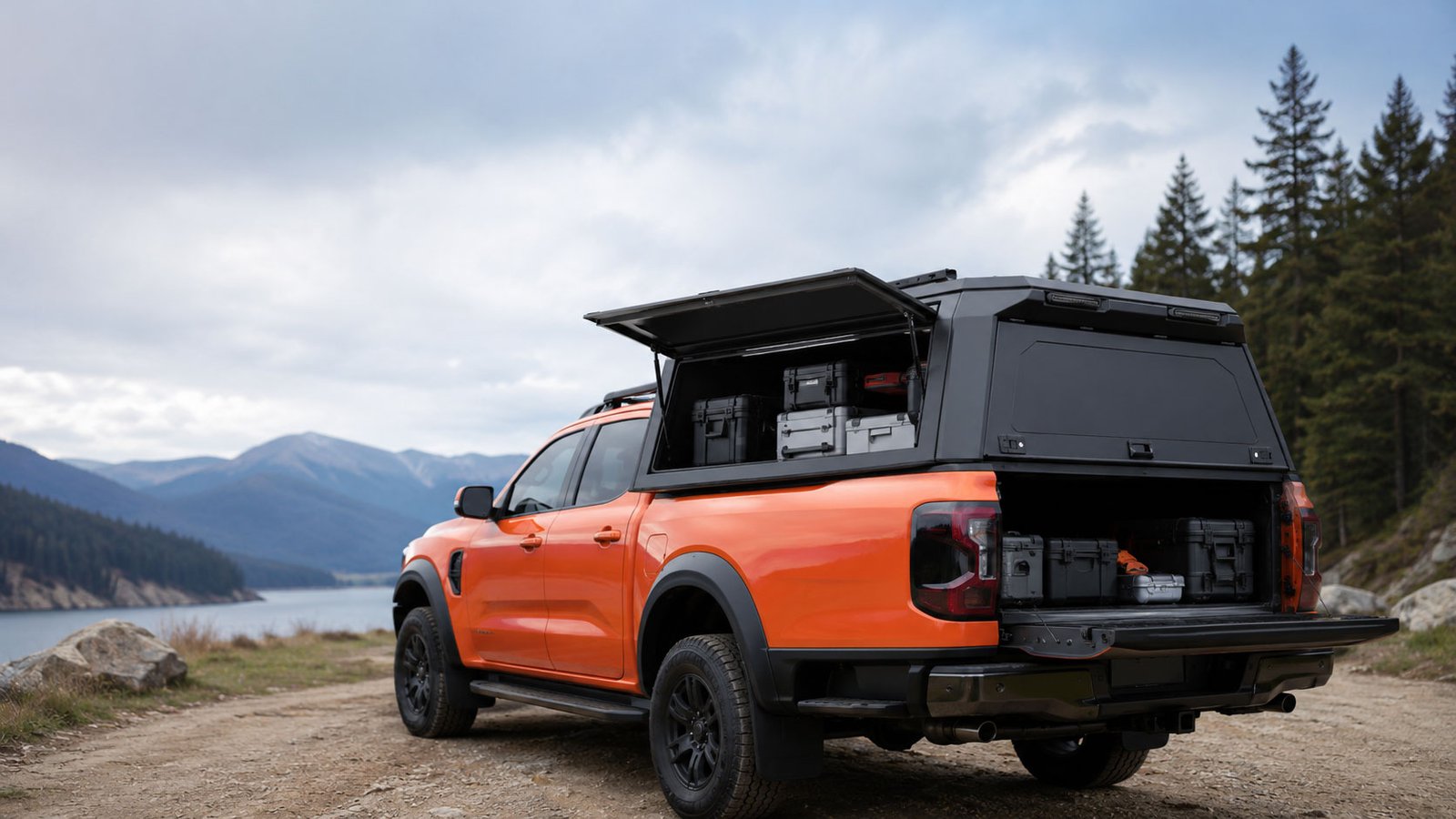
Pickup Truck Caps & Canopies: 10 Specifications B2B Buyers Should Confirm Before Ordering
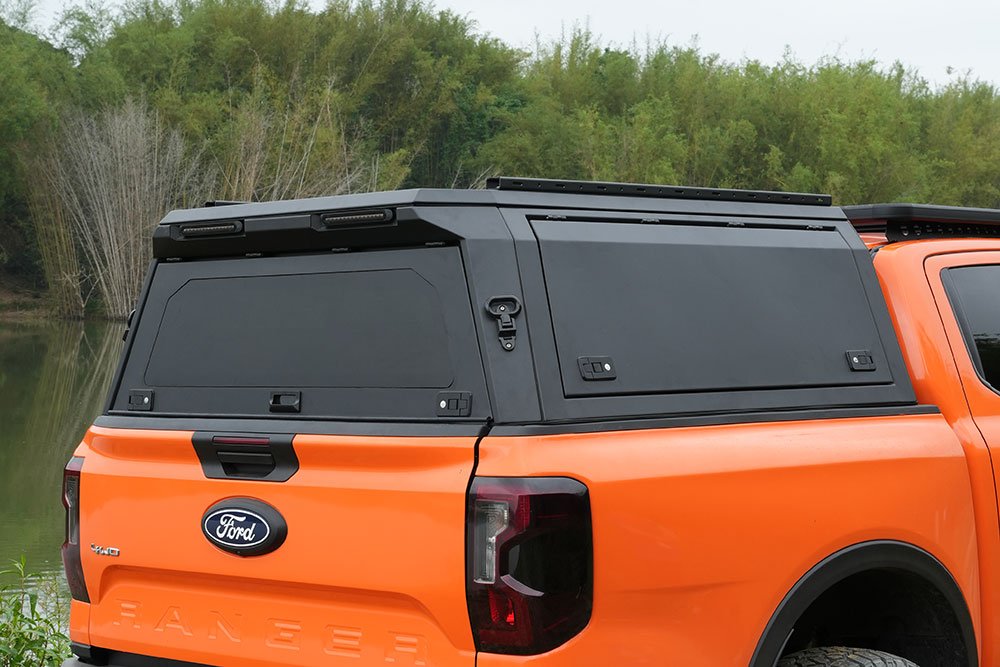
For an importer, distributor or private-label brand, a pickup truck canopy is a vehicle-specific system—not simply a shape with a unit price. Fitment, structure, doors, seals, electrical components, roof-load capability, packaging and installation can all affect customer satisfaction and after-sales cost. This guide covers ten specifications to confirm before approving a sample or placing a production order.
Scope note: This article provides a sourcing framework, not a universal performance specification. Available configurations, test results and vehicle applications must be confirmed for the exact canopy, pickup and project under review.
Truck Cap, Truck Topper, Canopy or Pickup Hardtop?
The same general product category has different names across markets. Using the buyer's familiar term can improve product discovery, but technical documents should still identify the exact construction and vehicle application.
| Market or context | Common terms | Practical usage note |
|---|---|---|
| United States and Canada | Truck cap, truck topper, camper shell | Truck cap is a useful commercial category term; camper shell often appears in recreational searches |
| Australia and New Zealand | Ute canopy | Confirm whether the buyer means a canopy mounted to the original tub or a canopy designed for a separate tray |
| United Kingdom and parts of Europe | Pickup hardtop, truck hardtop | Hardtop can describe several enclosure styles, so material and structure should be stated |
| Global B2B sourcing | Pickup truck canopy, truck cap | These terms work well in specifications, quotations and export communication |
A truck cap or canopy encloses the space above the pickup bed. It is different from a tonneau cover, which normally closes the bed at or near bed-rail height. Major truck-cap brands likewise describe caps as vehicle-specific enclosures and advise buyers to confirm the truck's make, model, model year and bed configuration before ordering (LEER truck-cap overview).

1. Define the Target Market and End Use
Start with the work the canopy must perform. A retail product for daily drivers may prioritize exterior appearance, privacy glass and convenient access. A commercial or fleet program may place greater weight on tool organization, lockable side doors, serviceability and repeatable installation. An outdoor range may require roof-mounted accessories, interior lighting and space for bulky equipment.
Ask the following before comparing quotations:
- Who is the end user: private owner, tradesperson, fleet operator or outdoor customer?
- What will normally be carried inside the bed?
- What access, roof-mounted equipment and electrical functions are required?
- Which sales channel, climate and usage conditions should the specification address?
These answers determine the appropriate doors, locks, lighting, seals, accessories and validation plan.
2. Confirm the Exact Vehicle Application
Pickup names alone are not sufficient fitment information. The same model may have different bed dimensions, rail profiles or body details across generations and sales regions.
At minimum, provide:
- Vehicle manufacturer, model and year range;
- Country or sales market;
- Cab configuration and pickup-bed length;
- Photographs of the vehicle and bed rails;
- Existing bedliners, sports bars, utility tracks or other accessories;
- Reference measurements when requested.
SEMRISE maintains fitment data covering more than 107 pickup applications. It supports project review but does not replace order-specific confirmation. Record the exact application on the quotation, sample record and approved specification.

3. Review the Aluminum Structure
Aluminum canopy is a material category, not a complete specification. Compare the actual panel, reinforcement, joint, hardware and coating details:
| Item to confirm | Why it matters | Evidence to request |
|---|---|---|
| Aluminum grade and panel thickness | Influences weight, forming, stiffness and repair considerations | Material specification and controlled drawing |
| Frame and reinforcement layout | Affects door openings, roof rails and high-stress areas | Structural drawing or clear internal photographs |
| Panel connection method | Influences assembly consistency and serviceability | Assembly diagram and sample inspection |
| Hinge design and attachment | Repeated door use concentrates force around hinge locations | Hardware specification and functional-cycle records where available |
| Surface preparation and coating | Affects appearance and resistance to the intended environment | Agreed finish specification and inspection criteria |
| Fasteners and replaceable hardware | Influences maintenance and spare-parts support | Bill of materials or illustrated parts list |
Do not select from panel thickness alone; evaluate how the panels, joints, hinges and mounting points work together.
4. Evaluate Modular Assembly and Vehicle Installation
SEMRISE modular aluminum canopies are packed as separate components for shipment. After tool-assisted assembly, the completed canopy can be secured to the pickup bed without drilling into the vehicle body for the specified applications.
Buyers should distinguish between these two operations:
- Product assembly: Joining the canopy panels, doors, seals, lights and hardware after unpacking;
- Vehicle installation: Aligning and securing the completed canopy to the pickup bed.
Request an illustrated manual, hardware list, tool requirements and final inspection checklist. Treat assembly time as an estimate because technician experience, configuration and working conditions vary.

5. Select the Right Door and Access Configuration
Access design affects daily use. A large rear opening supports general loading, while lift-up side doors can make tools reachable without climbing into the bed.
| Configuration point | Questions for the buyer and supplier |
|---|---|
| Rear door | What is the clear opening size? How is the door supported, latched and sealed? |
| Side doors or windows | Does the application require full side access, visibility, ventilation or solid security panels? |
| Locks and handles | Can the lock be operated with gloves? Are keys, cylinders and replacement parts documented? |
| Hinges | Are hinges concealed or external? How are loads distributed into the surrounding structure? |
| Privacy glass | Is the glass specification suitable for the intended market and application? |
| Gas struts | Are the force rating, mounting position and replacement references available? |
More openings are not always better. Every door and window adds interfaces requiring sealing, adjustment and service support.

6. Specify Lighting and Electrical Integration
Separate exterior signaling requirements from interior cargo-area lighting.
For exterior lights, confirm:
- Intended function, voltage and electrical interface;
- Wiring harness, connectors, protection and installation steps;
- Compatibility with the target vehicle and market requirements;
- Troubleshooting and replacement procedures.
For interior lights, confirm location, switching method and protection. Validate all electrical functions on the target vehicle rather than assuming one wiring arrangement works across every market.
7. Define Water-Resistance Requirements
No responsible specification should reduce water resistance to a single word such as waterproof. Performance depends on panel joints, opening seals, fasteners, bed geometry, installation alignment, drainage and the test method.
SEMRISE uses sealing elements around opening seams and has checked water-resistance performance through internal testing under defined conditions. Buyers should confirm the applicable test method and acceptance criteria for each project.
A useful water-resistance specification records:
- Product configuration and vehicle application tested;
- Spray direction, flow or rainfall simulation and duration;
- Door, window and tailgate positions;
- Areas inspected, acceptance criteria and retest procedure.
The wording used in sales material should match the available evidence. Even established manufacturers note that weather resistance can vary with the product, installation, openings, seals and accessories (LEER truck-cap FAQs).

8. Verify Roof-Load and Vehicle-Payload Requirements
Roof-load discussions require precise terminology. Static load, dynamic load, canopy rating, rack rating and vehicle payload describe different limits and must not be substituted for one another.
| Term | What it describes | Buyer action |
|---|---|---|
| Static canopy roof load | Load supported under the manufacturer's defined stationary conditions | Confirm load distribution, approved mounting points and test configuration |
| Dynamic roof load | Load permitted while the vehicle is moving | Request a separately validated rating; do not derive it from static capacity |
| Roof rack or crossbar rating | Limit of the rack system and its attachment method | Use the lowest applicable component or system limit |
| Vehicle payload | Weight available for occupants, accessories and cargo under the vehicle manufacturer's definition | Include the canopy, racks, equipment and carried cargo in the calculation |
| Axle and gross vehicle limits | Manufacturer and legal limits for the complete loaded vehicle | Verify the target vehicle and local requirements |
For the applicable SEMRISE modular aluminum canopy configurations, the integrated roof rails support up to 150 kg of static load under the specified installation and load-distribution conditions. This is not a dynamic-load rating. Buyers planning roof tents, ladders, cargo boxes or other equipment should request the complete load conditions and confirm the vehicle, mounting system and every attached component.
Vehicle manufacturers define Gross Vehicle Weight Rating as the maximum allowable loaded vehicle weight, so the installed canopy and accessories consume part of the available payload (Ford vehicle-weight glossary). Workplace transport guidance also warns that a vehicle should not be loaded beyond its rated capacity or legal axle and gross-weight limits (UK Health and Safety Executive, HSG136).
An enclosed canopy does not secure the cargo inside it. Loads should still be restrained with suitable, rated attachment points and equipment. The UK's Driver and Vehicle Standards Agency notes that unsecured loads can affect handling, braking distance and rollover risk (DVSA load-security guidance). Buyers should check the rules that apply in their own market.

9. Confirm Fitment Before Mass Production
A database can accelerate product selection, but production approval should follow a controlled fitment process. Buyers should agree on:
- The vehicle and bed definition used for development;
- Drawing or measurement revision;
- Sample SKU and configuration;
- Gap, alignment, door and tailgate criteria;
- Seal, water-test, wiring and lighting checks where applicable;
- Installation hardware and instructions;
- Approval record and product-change control.
Fitment approval should be traceable. Avoid relying on a message stating that a canopy “fits” without identifying the vehicle year, market, cab and bed configuration.

10. Review Packaging, Spare Parts and After-Sales Support
Because canopies contain large panels, doors, glass, seals and hardware, export packaging is part of the product specification.
Confirm:
- Whether the canopy ships assembled or as modules;
- Packing dimensions, gross weight and units per package;
- Protection for panels, glass, doors, corners and roof rails;
- Hardware identification and shortage control;
- Carton, frame or pallet structure for the transport route;
- Loading plan and handling instructions;
- Replacement availability for locks, keys, seals, struts, hinges, lights and fasteners;
- Warranty scope, claim evidence and resolution procedure.
Where practical, review packaging after a shipping or handling trial to identify panel rubbing, corner deformation or mixed hardware.
B2B Pickup Canopy RFQ Checklist
Copy this checklist into an initial enquiry so suppliers quote the same project scope.
| RFQ section | Information to provide or request |
|---|---|
| Buyer and market | Destination country, sales channel, target user and planned annual volume |
| Vehicle application | Make, model, year range, sales market, cab, bed length and existing accessories |
| Product construction | Aluminum specification, panel thickness, frame, joints, hinges, finish and color |
| Configuration | Roof profile, rear door, side doors/windows, locks, glass and interior layout |
| Electrical | Exterior-light functions, interior lighting, harness, connectors and target-vehicle validation |
| Installation | Modular assembly steps, tools, mounting method, drilling requirement and inspection checklist |
| Water resistance | Test method, test configuration, duration, acceptance criteria and evidence |
| Roof loading | Static and dynamic ratings stated separately, load distribution and approved attachment points |
| Quality approval | Sample record, dimensional checks, functional checks and agreed inspection plan |
| Branding | Logo method, label, color, packaging, VI requirements and artwork approval |
| Packaging and logistics | Packing dimensions, gross weight, protection, handling, loading quantity and shipping method |
| After-sales | Warranty scope, spare parts, claim documentation and response procedure |
Procurement tip: Put the agreed answers into a controlled product specification. A quotation, sample and inspection report are most useful when they all refer to the same SKU, vehicle application and revision.
SEMRISE Modular Aluminum Canopy Examples
Two SEMRISE examples illustrate different appearance and hardware options within the modular aluminum category:
- 8000SE-C Aluminium Hardtop Canopy Double Light: A double-light configuration with reinforced external hinge details and an enlarged lock that also functions as a handle;
- 8000SE-X Aluminium Hardtop Canopy Single Light: A single-light configuration with concealed hinge details and black or white finish options subject to project confirmation.
Match either example to an approved vehicle application and confirm its lighting, locks, load conditions, finish, branding, packaging and installation details.
Frequently Asked Questions
Is a truck cap the same as a pickup truck canopy?
They often describe the same enclosure. Truck cap is common in North America, ute canopy in Australia and New Zealand, and pickup hardtop in the United Kingdom and some export markets. Specifications should identify the material, structure and vehicle application.
Are modular aluminum truck canopies universal?
No. Modular construction describes how the canopy is built and shipped; it does not make fitment universal. Confirm the model, year, market, cab and bed dimensions.
Does a no-drill installation mean no tools are required?
No. Modules still require tool-assisted assembly. No-drill vehicle installation means the approved mounting method does not require drilling into the vehicle body for the specified application.
Is a water-resistant truck canopy completely waterproof?
Water resistance depends on seals, openings, installation and test conditions. Ask for the test method and acceptance criteria rather than treating a limited test as a guarantee under every condition.
Can a 150 kg static roof rating be used while driving?
Not automatically. Dynamic capacity must be separately confirmed along with the rack, attachment points, vehicle payload and vehicle-manufacturer limits.
What should a buyer approve before mass production?
Approve the exact vehicle application, controlled specification, sample configuration, fitment record, finish, hardware, lighting, installation instructions, test requirements, packaging and inspection plan. Record any later change through an agreed revision process.
Discuss Your Pickup Canopy Project
SEMRISE works with importers, distributors, wholesalers and private-label brands on pickup truck bed-cover and canopy programs. To begin a canopy discussion, prepare the target market, vehicle applications, expected configuration, branding needs and estimated order plan.
Explore SEMRISE Truck Caps & Canopies or request a quote to review your project requirements.
References and Editorial Notes
- LEER: Truck Caps & Camper Shells — terminology, product-selection factors, vehicle-specific fitment and weather-resistance considerations;
- Ford Vehicle Glossary — vehicle-weight terminology;
- UK Health and Safety Executive: Workplace Transport Safety — rated capacity, axle limits and load stability;
- UK Driver and Vehicle Standards Agency: Load Security — why cargo must be secured during transport;
- SEMRISE product data, internal static-load test, internal water-resistance test and vehicle-fitment records — product-specific statements require final internal review before publication.
Prepared by the SEMRISE Editorial Team for B2B sourcing education. Confirm the current controlled specification, test conditions and fitment before ordering.
Written by Qingshuai
Content prepared by the SEMRISE team, drawing on our experience supporting pickup truck bed cover products, vehicle fitment, manufacturing and global B2B projects.
Related Articles
Continue exploring practical guidance and insights from the same topic.

Inside SEMRISE Modular Aluminum Truck Canopies: From Packed Modules to Vehicle Fitment
Explore how SEMRISE modular aluminum truck canopies move from packed components to tool-assisted assembly, no-drill vehicle installation and application-specific fitment review.Read Article
Looking for a Pickup Truck Bed Cover Supply Partner?
Tell us about your product category, target vehicle applications, branding or bulk sourcing requirements.